Drooping, Sad Alocasia Plants: How to Fix It
Wilted alocasia leaves are a sad sight to behold. Briana Yablonski shares a few causes of this issue as well as ways to determine the ideal drooping alocasia fix.

Contents
It can be alarming when you notice your alocasia’s leaves transform from rigid to wilted, but this is a common issue among indoor alocasia. These wilted leaves are rarely a death sentence, especially if you catch the problem early.
If you’re searching for a drooping alocasia fix, the first step is understanding what’s causing the problem. Overwatering, underwatering, temperature fluctuations, and other factors can all lead to drooping foliage.
I’ll explain a few reasons why your plant’s leaves may be looking sad and provide solutions for each issue.
Why Do Alocasia Leaves Droop?

The Alocasia genus consists of dozens of tropical plants native to parts of Asia and Australia. All of these plants are aroids that grow from rhizomes. Some alocasia varieties are commonly kept as houseplants, where they brighten homes with their large leaves.
Some people say alocasia plants are easy to care for, but keeping them as houseplants often comes with challenges. One common issue is drooping leaves. It’s important to remember that these wilting leaves aren’t a disease themselves but rather a symptom of a problem.
Environmental issues are the most common cause of drooping alocasia leaves. Since most of these plants are accustomed to tropical environments, they can experience stress from cold temperatures, low humidity, and improper watering. Sometimes, the leaves respond to this stress by wilting.
Although it’s less common, diseases can sometimes cause drooping leaves. Since there are so many different potential causes of drooping leaves, learning more about them is one of the best ways to work towards a drooping alocasia fix.
Causes of Drooping Alocasia Leaves
Since drooping leaves aren’t a set issue but a symptom of a bigger problem, learning the cause is essential to fixing the problem. Here are a few common causes to watch out for.
Overwatering

Most Alocasia species prefer soil that remains slightly moist. If the potting mix remains wet for extended periods, the plants will likely become stressed and may develop drooping leaves. The wilted leaves typically remain green at first, but they may become yellow over time.
If you think you’re overwatering, the easiest drooping alocasia fix is to decrease the amount you water. Rather than watering on a set schedule, only add water when the top two inches of potting soil are dry.
Another thing to watch out for is poorly draining soil. Even if you only water your plant once every few weeks, compacted or poor soil can prevent excess water from escaping and lead to waterlogged soil. Always use a container with drainage holes and choose a loose, well-draining soil mix with materials like perlite or coconut husk chips.
Underwatering

Underwatering can also cause alocasia leaves to become limp. Although these plants can tolerate slightly dry soil, they won’t remain happy if the soil becomes fully dry.
A lack of water often causes drooping leaves with yellow or brown tips. You may also notice the top of the soil is cracked or crumbly.
If you notice the soil is dry, rehydrating it is the best drooping alocasia fix. Water slowly until the soil is evenly moist.
In the future, water the top two inches of potting mix as soon as they are dry. If you find this happens more than once a week, consider switching to a blend that contains more water-holding materials like compost or coco coir.
Low Humidity

The majority of alocasia plants are native to tropical regions with moderate to high humidity. While they can tolerate household humidity around 50%, they’ll begin to become stressed if the air moisture drops to 20% or below. This dry air often becomes a problem in the winter when heaters remove air moisture.
You can fix low humidity by increasing the amount of moisture in the air. Adding a humidifier is the most effective solution. You can also mist the area around your plant with a water bottle, but this is a temporary and largely ineffective remedy.
Temperature Stress
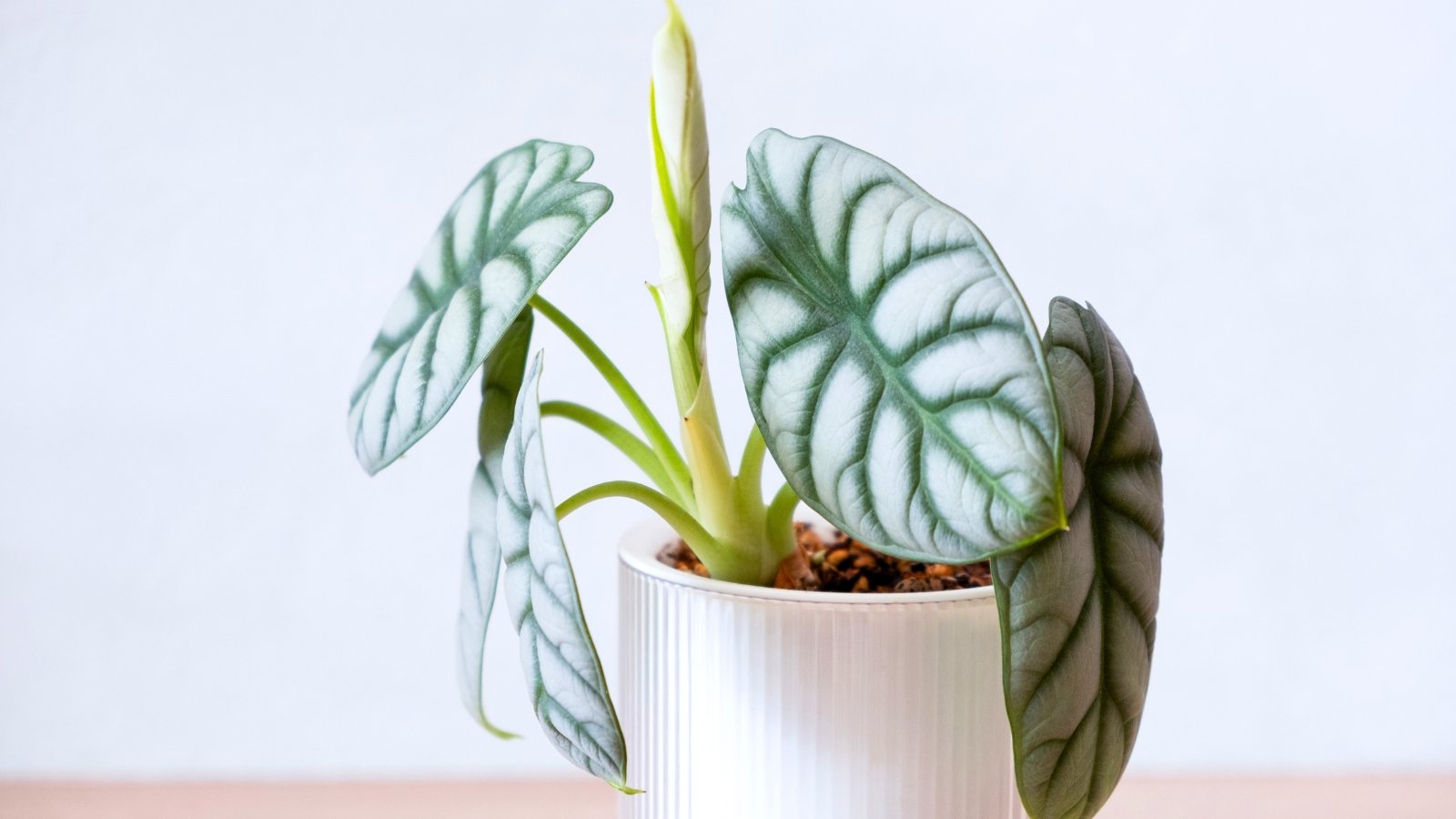
Alocasias thrive in warm, stable temperatures that remain between 65 and 85°F (18 and 29°C). Fluctuations above and below this range can stress the plant, so aim to keep the temperature within this range.
Sudden temperature changes also lead to stress. Cold drafts are particularly dangerous, so make sure to keep your alocasia away from air conditioning vents, poorly insulated windows, and other cool areas.
The stress of temperature changes, especially cold drafts, can lead to droopy leaves. While you can’t fix stress after it occurs, you can prevent future damage by moving your plants away from these drafts.
Transplant Shock
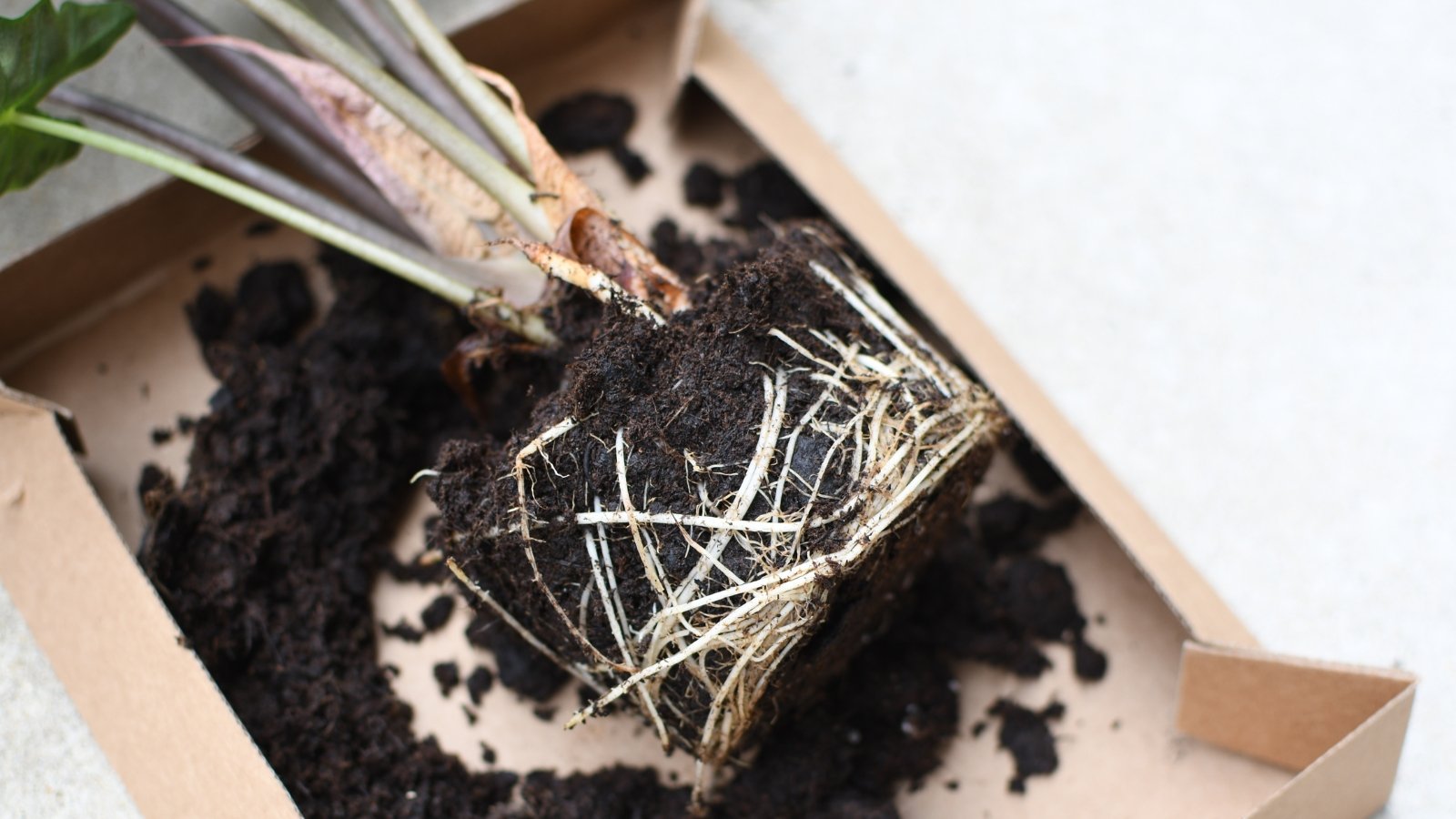
Alocasia are particularly sensitive to repotting, so they often develop drooping leaves after being moved to a new container. You should only repot these plants when they’re too large for their current pot to avoid unnecessary stress.
Fortunately, alocasia will recover as long as the environment remains stable. Avoid moving the pot and keep the soil moderately moist.
Root Rot
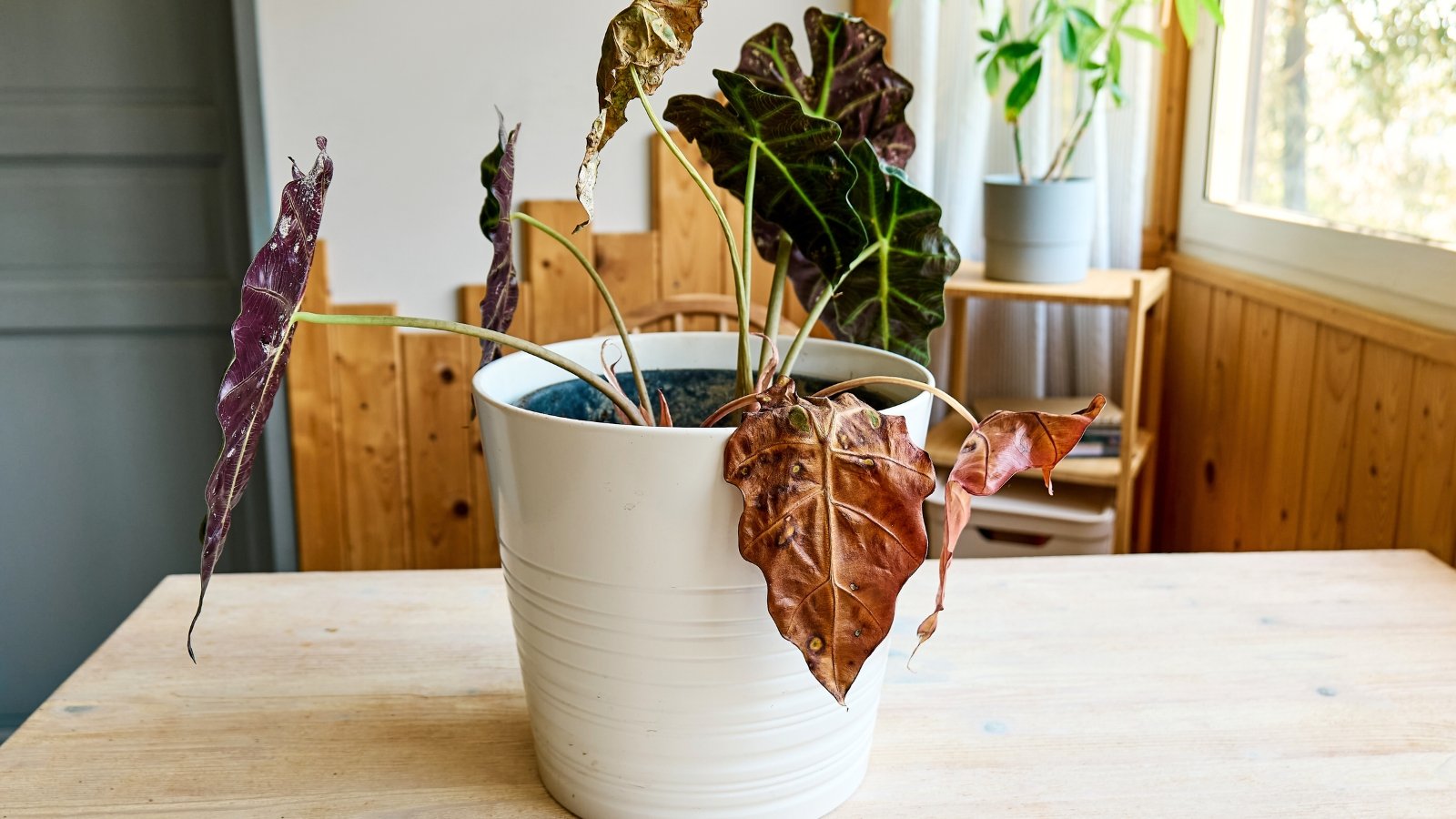
Root rot refers to symptoms caused by numerous species of fungi and oomycetes. Although these organisms are different, they all cause roots to become soft. Eventually, the plants face difficulties with water uptake, leading to wilting leaves.
Moist soil greatly increases the chances of root rot, so avoid using poorly-draining soil or overwatering.
If you suspect your alocasia is infected, start by reducing the amount of water you give it. Some plants will be able to recover on their own.
Sometimes, you need to take more drastic measures. Remove the plant from its container, gently brush off extra soil, and trim off any soft roots. Repot using fresh potting soil.