

Citrus Fertilizer: What, When, And How To Use It
What is citrus fertilizer, when do you need it, and how do you use it? We explore your options for citrus fertilization!


Contents
Are you growing potted citrus trees or citrus fruits in your home garden? Or are you considering starting your own citrus orchard? If so, one of the most important tools you’ll need at your disposal is citrus fertilizer!
Citrus trees are persistent on their own, but they need love and care like any other fruit trees. That’s why it’s important to ensure each citrus tree has not only excellent base soil but a good fertilizer too. And there are plenty to choose from.
Today we’re tackling citrus fertilizer. We’ll talk about the basic nutrition citrus trees need and discuss the types of fertilizer on the market. We’ll finish up with information on how to apply the citrus fertilizer you choose, so you can grow delicious fruits from a strong, healthy, abundant citrus tree.
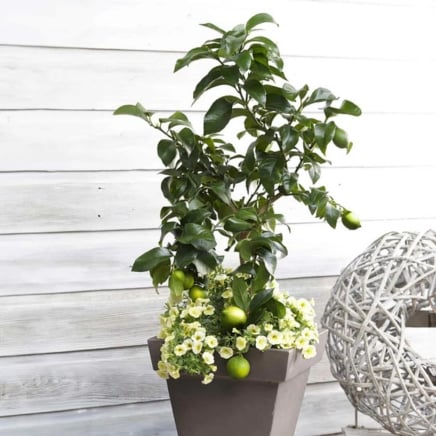


What Nutrients do Citrus Trees Need?

Like all plants, citrus trees require the three basic building blocks of nutrients: nitrogen, phosphorus, and potassium. Did you know there are also three other macronutrients?
These are calcium (Ca), magnesium (Mg), and sulfur (S). Without all six nutrients, plants have a hard time completing their life cycle. Most residential soil usually contains the latter three but often fluctuates in N, P, and K depending on what else has been grown in it and other factors.
Fruit trees also benefit greatly from the addition of micronutrients. These are found in trace amounts in healthy soil and also come in many of the high-quality organic citrus tree fertilizer brands out there. A balance between the macronutrients (N, P, K, Ca, S, and Mg) and micronutrients ensures a healthy tree and luscious citrus fruits too.
The micronutrients in question are manganese, zinc, iron, copper, boron, molybdenum, chlorine, and nickel. Deficiencies in any of these can cause different issues that may be hard to diagnose unless you know exactly what to look for. That’s why organic citrus fertilizer coupled with good base soil conditions are great ways to cover your nutrient bases.
Citrus trees consume a lot of nitrogen to produce new growth leaves that assist in nutrient absorption for flower and fruit production. They also consume high amounts of calcium and potassium, which boost flowering and fruiting while supporting other nutrient functions.
More specifically, Ca develops strong root systems and reinforces cell walls. Potassium feeds directly into fruit production and the development of viable seeds within that fruit.
Citrus Fertilizer Formulas for Different Trees?

While you might see fertilizers specific to a type of citrus tree, the same fertilizer can likely be applied to another citrus tree with equal success. Most fertilizers on the market are more generalized and feed each citrus fruit tree equally. Adjustments in nutrient content don’t often occur in amounts that would matter much to lemon or lime trees. As long as they have the food they need to thrive, it’s all good!
So if you find a fertilizer that is generalized for citrus, know it will most likely work on your ‘Meyer’ lemon tree just as well as it would on your navel orange tree. However, some formulations will work best with certain citrus while providing basic nutrition for others.
Types of Citrus Fertilizer
There are many different types of fertilizer, with plenty made specifically for citrus trees. Let’s run down the types of citrus plant fertilizer on the market today. While there are formulas designed for high performance, the best citrus fertilizer will be one suited to your needs and your schedule.
Citrus Fertilizer Spikes

Spikes are best for potted citrus trees rather than those in the ground. Different companies sell these. Fertilizer spikes utilize potassium and phosphorus to feed citrus trees for producing fruit and flowers.
Some go the extra step and include mycorrhizal fungi and single-celled archaea that work together to increase the productivity of the tree’s root mass. They’re used twice per year in the soil around trees and can be found in most home improvement stores.
Citrus Fertilizer Sprays

Sprays for your citrus fruit tree are meant to be applied to soil or foliage. They include the basic macronutrients your citrus tree needs along with a few other nutrients, including zinc, iron, sulfur, manganese, and magnesium.
Not only do these citrus fertilizers help produce lush foliage, but they also boost tree tolerance to cold, heat, and even drought. These are applied during the dormant season.
Citrus Fertilizer Powders

The Organic Materials Review Institute has put its stamp of approval on certain brands of powdered organic fertilizer. Fertilizers with OMRI endorsement contain no synthetic chemicals and are generally formulated to be heavy on potassium and phosphorus. Often these powders are specially created for large-scale citrus growers or those who produce a lot of citrus in the growing season. They’re applied every couple of months.
Citrus Fertilizer Liquids

Liquid fertilizer is typically used during the fruiting phase of a fruit tree. These fertilizers are heavier on the nitrogen side of NPK than the others we’ve mentioned so far. With an NPK of 4.5-2.0-4.2, they assist in the production of lush growth and contain large amounts of Ca, which we know helps reinforce cell walls.
As a result, citrus fruit is much healthier and more supple when using liquid citrus tree fertilizer. Sometimes you’ll find highly effective formulations that are synthetic rather than organic.
Slow-Release Citrus Fertilizer
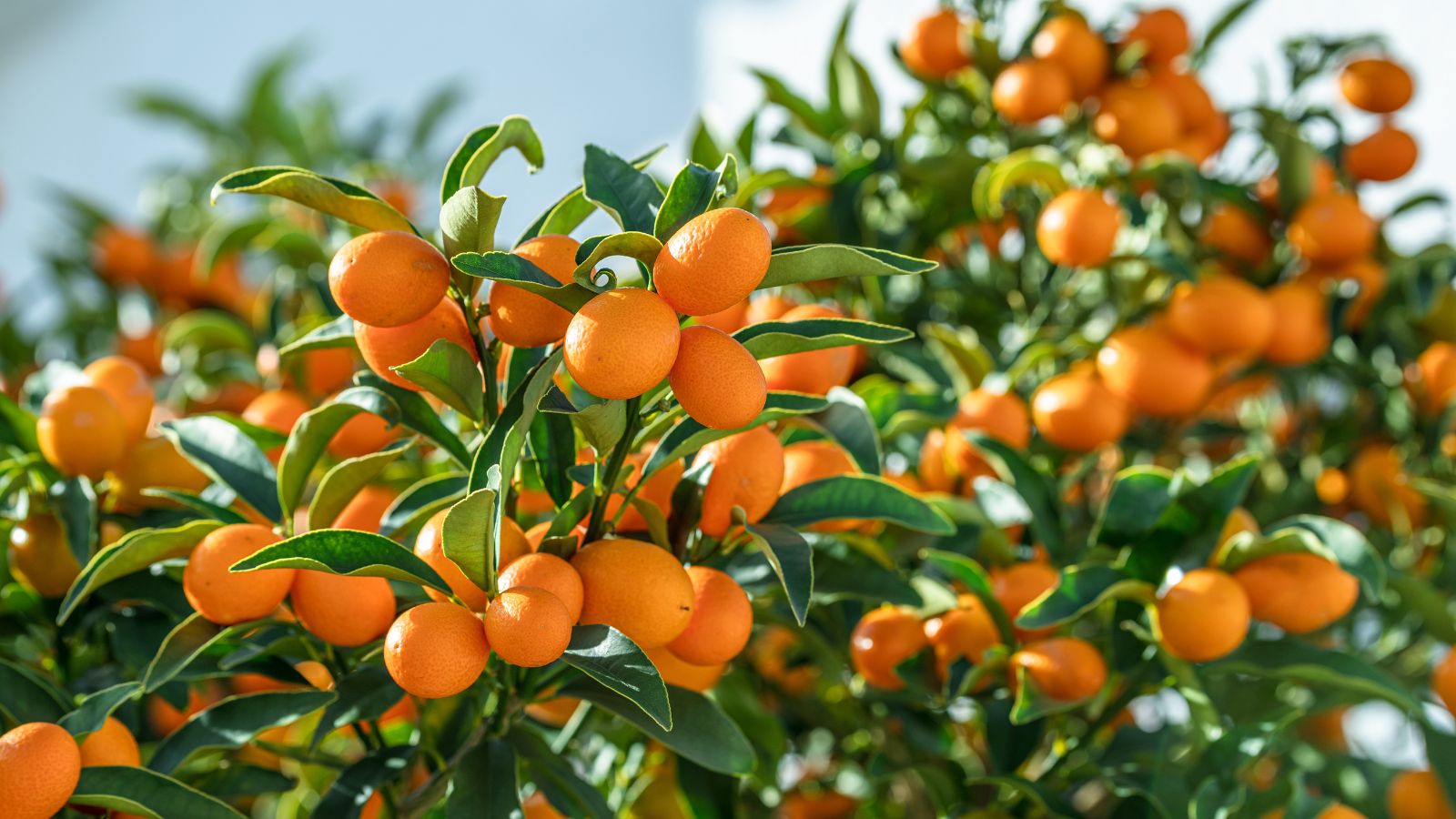
One benefit of using a slow-release organic citrus fertilizer is that more nutrients get packed into those little granules that dissolve over time. This means enhanced nutrient availability, and there are often beneficial microbes included.
Many of these fertilizers work on several types of fruit trees, so if you have a tropical tree garden with orange, kumquat, and avocado, there is probably a slow-release formulation out there that will suit all of them.
Another benefit of slow-release fertilizer granules is that you don’t have to apply them more than a few times a year. You will need even applications of water during the growing season to adequately release the nutrients, though.
Miscellaneous Citrus Fertilizer

You can also apply more specific natural fertilizers that break down and feed your trees over time. Annual applications of well-rotted compost provide better drainage, water retention, and a good profile of nutrients.
Fishbone meal with additions of sulfur, potash, and manganese provides trees with phosphorus and nitrogen that heavy-feeding citrus trees need. Add kelp meal to the mix for iron and other trace elements. Chicken manure is another high-nitrogen additive that can benefit citrus trees.
Feather meal and alfalfa meal both provide large amounts of nitrogen needed for foliage production. Feather meal fertilizes at a rate of 12-0-0 and feeds beneficial fungi in the soil. Alfalfa does the same at a rate of 2.5-1-1. Alfalfa pellets slowly deteriorate, adding aeration to the soil while feeding fungus and beneficial microbial content.
Humic and fulvic acid sprays improve soil and promote the uptake of both organic and synthetic ingredients, which in turn improves fruit quality.
When to Fertilize Citrus Trees
Compost and mulches like alfalfa can be applied at any time of year but work best at planting and during dormancy in winter and late fall. Soil additives like kelp, fishbone, and feather meal can be added annually before spring growth and at planting. The same goes for chicken compost.
Fulvic and humic acid sprays or soil soaks are best applied one to two times per year alongside your annual fertilizer.
How to Fertilize Citrus Trees
Now let’s talk about specific applications to plug into your citrus fertilizer schedule. Once you get a good system going, you’ll have delicious fruits aplenty! Remember, the best citrus fertilizer is one specifically formulated with organic nutrients that also fits your schedule. Use these two factors to determine which fertilizer is right for you.
Spikes

If your chosen fertilizer is in spike form, put them in the ground during the dormant season, shortly before spring. Find the drip line of your tree (the area two to three feet outside the circumference of the canopy) and water the area thoroughly. Place the protective cap on the spike and hammer it in flush with the ground.
You can use up to four spikes per tree at one time. Younger trees should have spikes closer to two feet outside the trunk diameter, and older trees should have them in the three-foot range. In containers, place one as far from the trunk as possible.
Sprays

Apply fertilizer sprays during dormancy as well. Note that these tend to stain surfaces, so prevent contact with your hands, clothes, containers, and nearby areas. Dilute the solution in a spray bottle or hose spray mechanism at a rate of one tablespoon per gallon of water, then lightly mist the entire tree. Do this one to two times between December and February.
You can also use this fertilizer to correct nutrient deficiencies during the growing season. In that case, use two tablespoons per gallon of water, applied at two-week intervals. Mature trees will need a gallon of solution, while younger trees will need less.
Powders

Most citrus growers fertilize with powdered organic fertilizer. Feed your tree during dormancy by thoroughly watering the area, then evenly spreading the powder.
For established plants and shrubs, apply at the drip line at one cup per 1.5 feet of spread, or two cups per three feet of spread.
For a fully grown tree, use three cups per inch for trunks that are three inches in diameter or less, and nine cups for a larger tree. Two brands that use natural sources for their powders are Espoma and Bumper Crop.
If you’re using a shake-and-apply fruit fertilizer, shake the jug and apply the powder at the drip line. How much you’ll need depends on the trunk diameter and the tree’s age. Avoid contact between the trunk and the fertilizer. This powdered fertilizer works for both container-grown citrus and outdoor plants.
Liquids

Since citrus trees are heavy feeders, you may benefit from plant food that can be applied throughout the season. To help your tree produce more fruit and promote active growth, use liquid fertilizers every three to four weeks. Simply water the drip line, then apply the fertilizer from the bottle attached to a hose.
Try not to wet other areas of the garden, and focus on your citrus tree. Because these are formulated to feed differently, consult the label to determine how much to use.
Slow-Release

Slow-release fertilizer is an excellent way to reduce the number of times you have to fertilize, lessening the workload and simplifying your citrus fertilization schedule. You’ll only need to apply it a few times per year.
For indoor trees, you can fertilize year-round for active growth. Outdoor trees should receive slow-release fertilizer during dormancy. Sprinkle the granules around the area to be fertilized at a rate of three tablespoons for every two-by-two-foot area, work them lightly into the soil, and water them in.
Frequently Asked Questions
What is the best fertilizer for citrus trees?
It depends on how you’re growing the fruit tree and how often you have time to feed it. See above!
When should you fertilize citrus trees?
In an outdoor garden, fruit tree fertilizers should be applied in dormancy, while an indoor tree can be fertilized year-round. It also depends on how you garden citrus fruit. Read through to see how different types have different timings.
What is a natural fertilizer for citrus trees?
Many citrus fertilizers are also organic fertilizers. The best citrus fertilizers are those that source from natural ingredients like kelp, bone, and alfalfa. Bumper Crop and Espoma are two brands that use natural sources in their formulations.
Can you over-fertilize citrus trees?
You can. Too much fertilizer can weaken the tree overall. Plan out a schedule to apply fertilizer and stick to it.
Can you fertilize citrus when flowering?
Yes! Specifically granular and powder fertilizers can be applied during the growing season.


