7 Easy Ways to Get Your Peonies to Bloom More
Peony flowers are so beautiful and short-lived that it’s hard not to want more of them. Gardening expert Madison Moulton shares practical steps to help your peonies produce more flowers.

Contents
Peonies bloom for about two weeks. After months of waiting, that’s a painfully short window (as enjoyable as it is). So if your plant is producing fewer blooms than you’d like, or if you’re just looking to get the most out of that brief season, there are several things you can do to push it in the right direction.
Peonies are long-lived (some have been known to bloom for 100 years in the same spot), and once you understand what they need, they tend to deliver reliably. Most of the adjustments that lead to more flowers are simple, and the payoff lasts for years.
Start With The Right Planting Depth

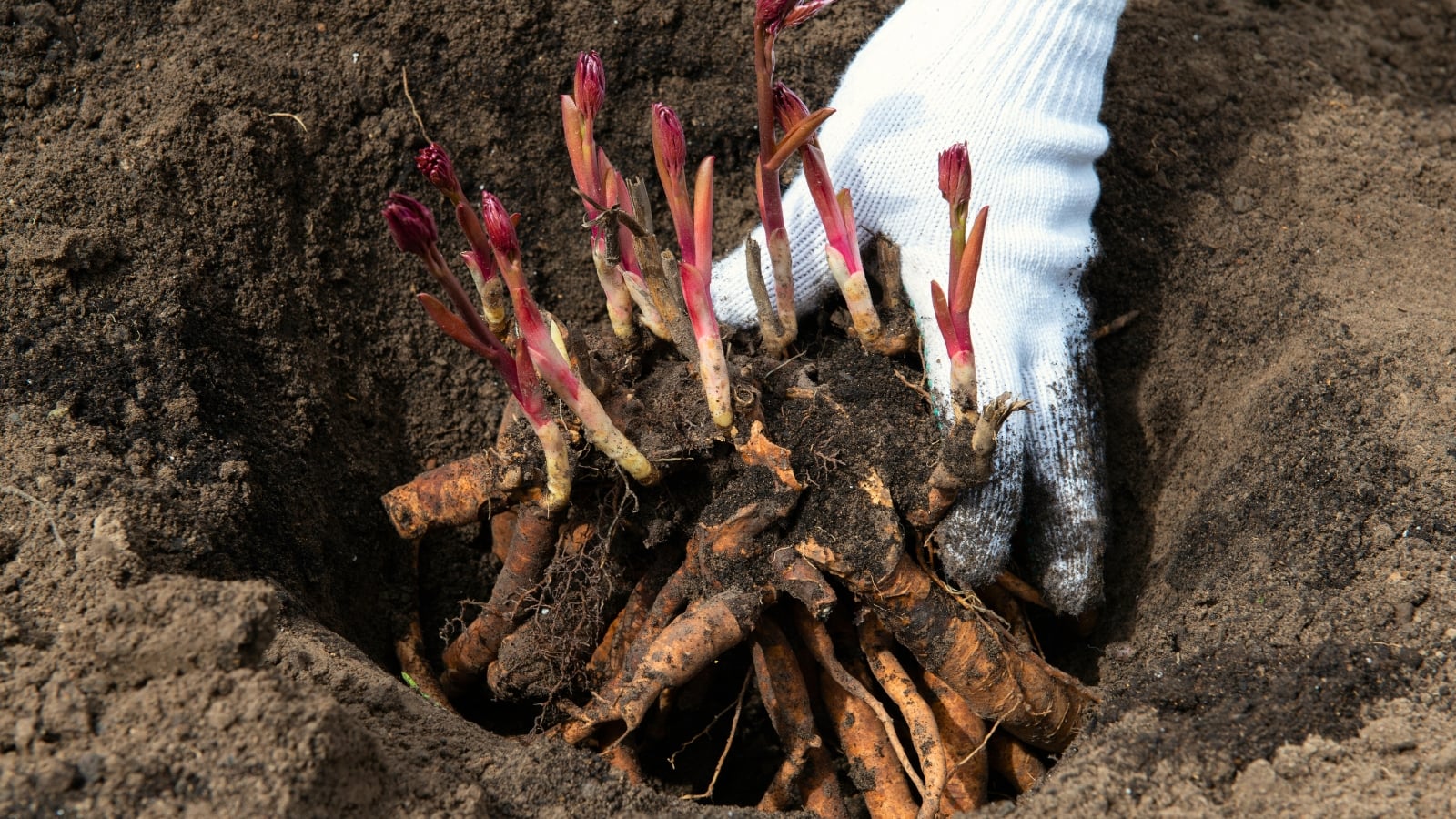
The first way to get peonies to bloom more starts at planting time. The eyes (those small reddish-pink buds on the crown) of your peonies should sit no more than two inches below the soil surface. If they’re buried any deeper, you’ll get plenty of healthy foliage but few or no flowers.
Planting depth can also shift over time without you doing anything intentional. Mulch that accumulates year after year gradually buries the crown deeper. Freeze-thaw cycles can also settle plants lower in the soil.
If your peony used to bloom and has slowly tapered off, this is one thing to investigate. Gently scrape back the soil around the crown in early spring to see where the eyes are sitting. If they’re too deep, the best fix is to lift, divide, and replant the entire root in fall, setting it at the correct depth.
Give Them More Sun
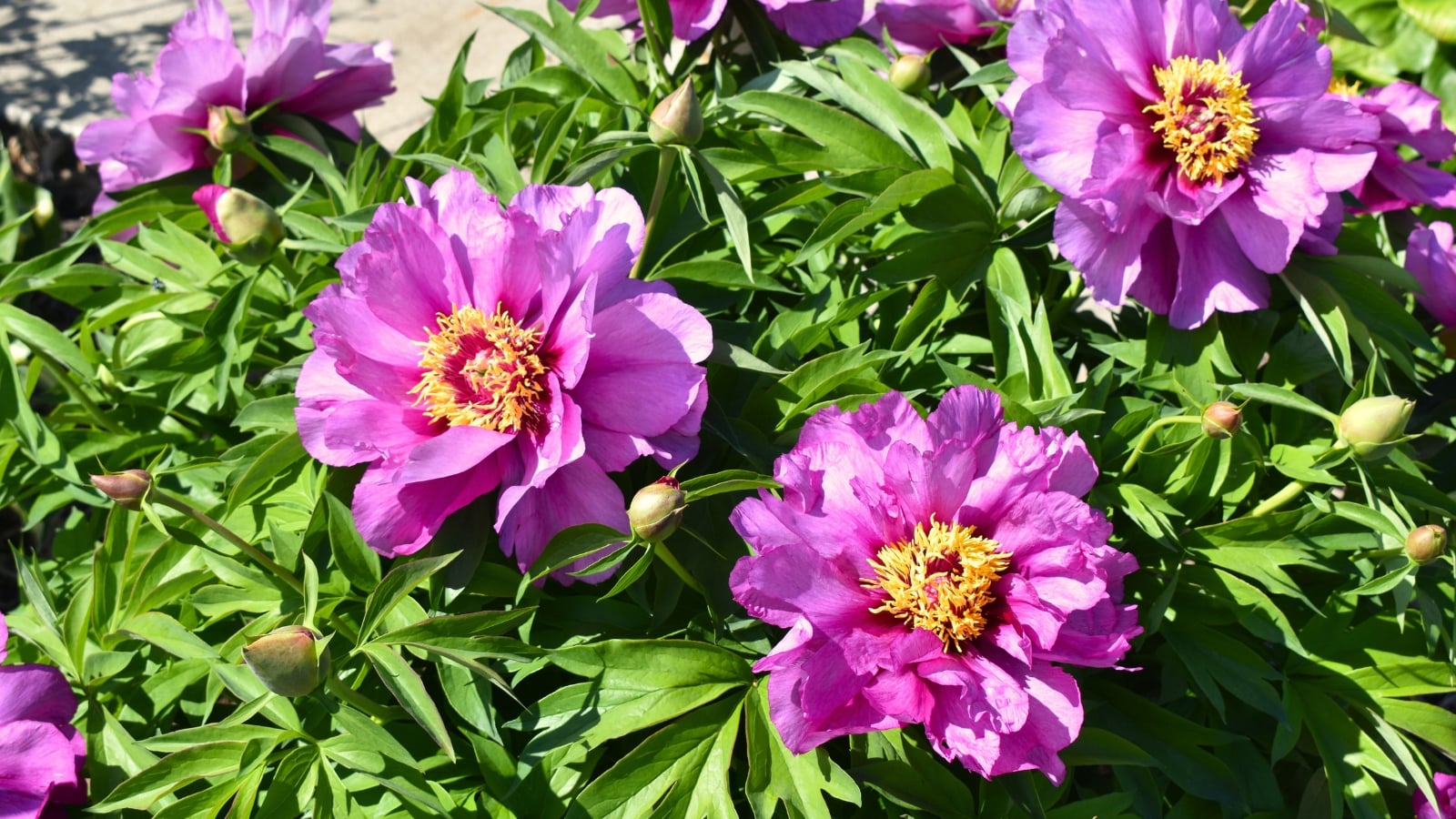
Peonies need a minimum of six hours of direct sunlight per day to bloom well. They can survive in less, but flower production drops off quickly in shade. If you’ve noticed a slow decline in blooms, step outside and watch how much direct light the plant gets through the day, especially from mid-morning through afternoon.
If shade is the issue, the options are to prune back whatever’s blocking the light or to move the peony to a sunnier spot. Moving a peony is always disruptive (more on that below), but if the current location no longer gets enough sun, it’s worth doing. Fall is the time for it.
Be Careful When Fertilizing

A peony with lots of lush foliage and no flowers is often a peony that’s getting too much nitrogen. Excess nitrogen pushes leafy growth at the expense of blooms. It’s a common problem when peonies are planted near a lawn that gets regular fertilizer treatments. The nitrogen spreads into the peony’s root zone and the plant responds by growing leaves instead of flowers.
If your soil is reasonably good, peonies don’t need much supplemental feeding at all. A light top-dressing of compost in early spring or late fall is usually enough. If you do fertilize, use something balanced or low in nitrogen (a formula where the first number isn’t the highest).
Be Patient After Planting or Dividing
Peonies take time to settle in, and expecting blooms in the first year or two after planting is setting yourself up for disappointment. Most newly planted peonies need time before they flower reliably, and some take even longer.
This applies to divisions too. If you divided a mature clump or transplanted a peony to a new spot, the plant needs time to rebuild its root system before it has enough energy to put into flower production. During this establishment period, the best thing you can do is provide good care (proper watering, adequate sun, correct depth) and wait.
If you inherited peonies with a new house and they don’t bloom the first spring, give them at least one full season before troubleshooting.
Deadhead After Blooming

Peonies only bloom once per season, so deadheading won’t produce a second flush of flowers the way it does with other plants. But removing spent blooms is still one of the most useful things you can do for next year’s flower count.
When a peony finishes blooming and you leave the spent flowers on the plant, it shifts energy into producing seeds. That energy would otherwise go into strengthening the root system. By snipping off faded blooms (cut back to just above the first strong set of leaves), you redirect that energy to building a healthier plant.
Deadheading also tidies up the plant considerably. Old peony flower heads get heavy and soggy, especially after rain, and can drag stems down onto the foliage or the ground. Removing them keeps airflow moving through the plant, which reduces the chance of fungal problems.
Improve Air Circulation

Peonies are susceptible to fungal diseases, particularly botrytis blight. It thrives in cool, damp conditions with poor airflow and it can wipe out an entire season’s worth of blooms before you realize something is wrong.
Good air circulation is one of the simplest defenses. Make sure peonies aren’t crowded by other plants. If you have a dense, mature clump, consider thinning out a few stems in early spring to let air move through the interior of the plant. Avoid overhead watering when possible, and water early in the day so foliage dries before evening.
Fall cleanup plays a role here too. Removing all peony foliage and debris at the end of the season eliminates the environment where botrytis spores overwinter, giving you a cleaner start in spring.
Try Disbudding for Bigger Blooms
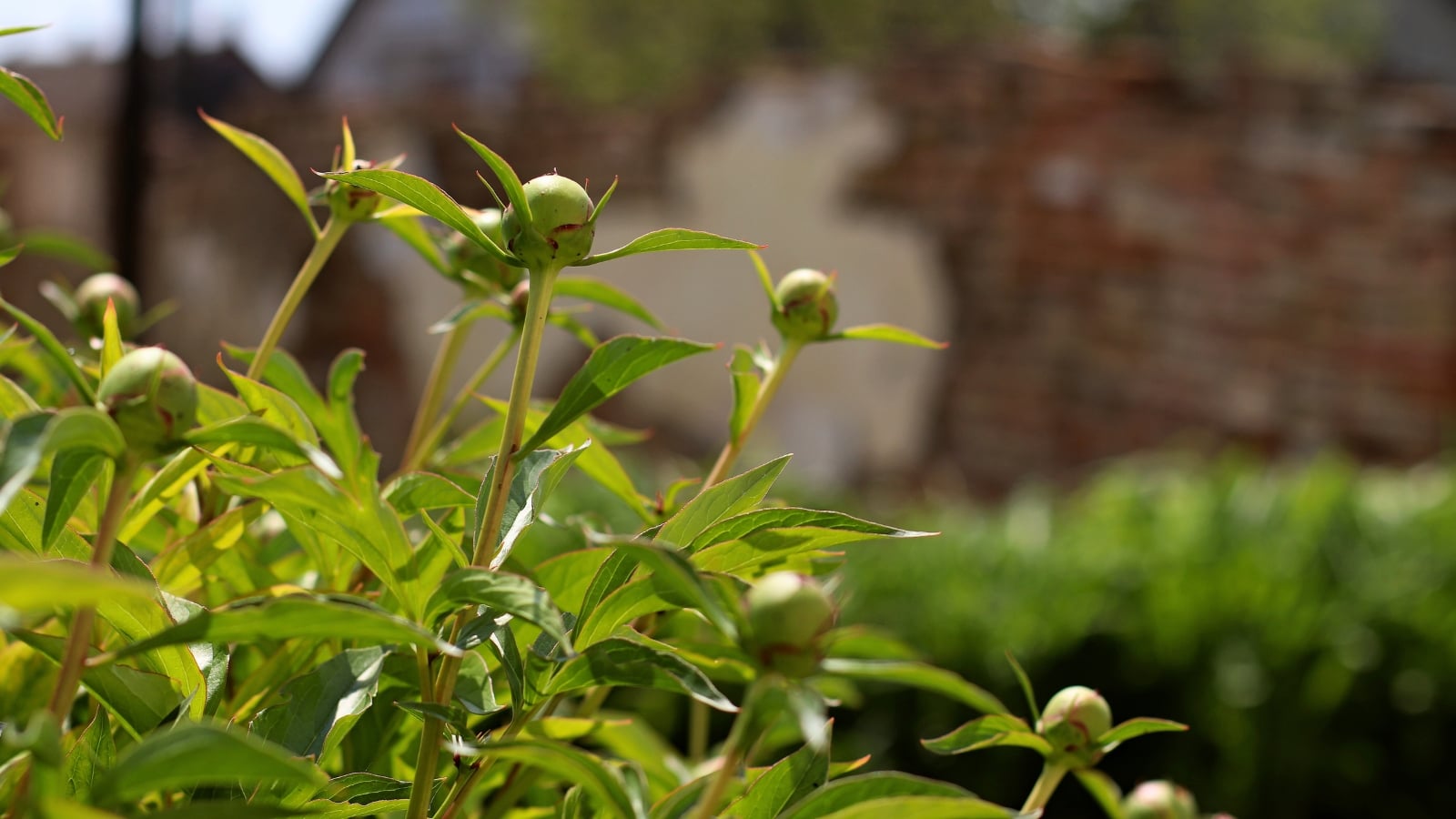
If your peony does bloom but the flowers are smaller than you’d like, disbudding is a technique worth trying. It won’t increase the total number of flowers, but it will make each remaining bloom noticeably larger and more impressive. In other words, it’s the opposite of getting more blooms, but the ones you do get will be much more impressive.
As buds develop in spring, most peony stems produce one large central bud with several smaller side buds forming along the stem below it. Pinch off those smaller lateral buds while they’re still small, leaving only the main terminal bud at the top of each stem. The plant then directs all its energy into that one flower instead of splitting it across several.
This is purely optional and a matter of personal preference. Some gardeners prefer the look of multiple blooms per stem, even if they’re slightly smaller. But if you want those classic, show-stopping peony flowers, disbudding is how you get them.